

B. Tech. Mechanical Engineering 60
M. Tech. Mechanical Engineering 9
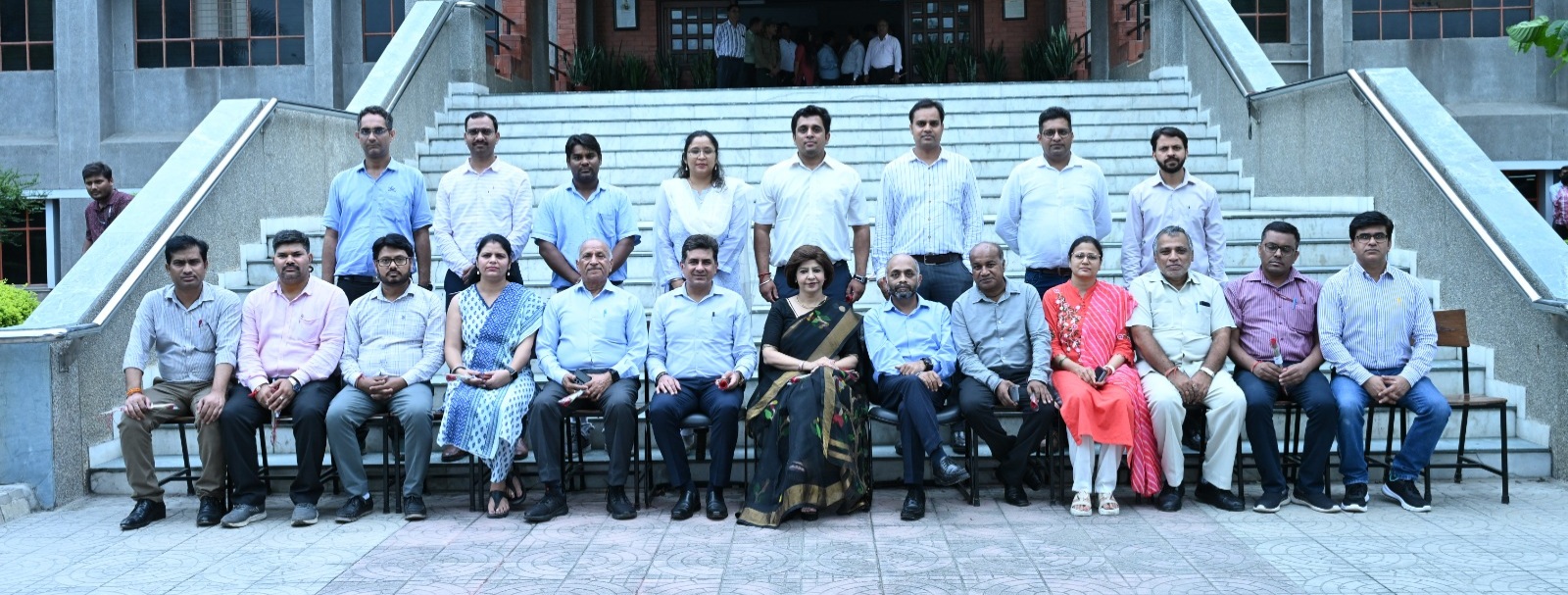
Department of Mechanical Engineering at AKGEC was formed in 1998 with inception of the college. The Department provides an outstanding research environment complemented by excellence in teaching. Ever since its inception, the department has been a pioneering academic centre for higher education, research, and innovation in key areas of Mechanical Engineering. The department provides full support to MTech. scholars in terms dissertation guidance, lab facilities and access to international and national journals. Experienced and senior faculty members are assigned for MTech courses and dissertation work of the scholars. The faculty members and M Tech scholars have published good quality research papers in peer-reviewed and indexed journals and International Conferences.
Vision & Mission
Vision
To produce professionally competent, socially sensitive, motivated, honest and dedicated mechanical engineers capable of working in multicultural global environment.
Mission
M1: Assist students in acquiring and maintaining the necessary theoretical and practical Mechanical Engineering knowledge.
M2: To keep students up to date on the latest innovations in Mechanical Engineering.
M3: Assisting students in becoming global engineers to address society's relevant and timely needs.
PEOs, POs and PSOs
Program Educational Objectives - PEOs
PEO 1.
The graduates of the mechanical engineering progamme will have adequate knowledge of science, mathematics and management field to suitably use it in practical problem studies and analysis to arrive at right solutions/decisions.
PEO 2.
The graduate of the mechanical engineering programme will have sound and in-depth knowledge and skill of core mechanical fields viz. Machine Design, Manufacturing Technology, Thermal Sciences (Basics & Applied), CAD/CAM, hydraulics and mechanics, Strength of Materials and Materials Science in particular and other associated fields of mechanical engineering in general. The graduates of mechanical engineering programme will have successful professional careers.
PEO 3.
The graduates of mechanical engineering programme will acquire additional advanced and updated knowledge through modified curriculum by making use of technological facilities available in centre of excellence (Tifac-core) of the institute.
PEO 4.
To promote institute and industry relations through regular interactions and by creating memorandum of understanding between the two. The graduates of mechanical engineering will be capable of demonstrating their management skills as leaders/members of a team in engineering assignments.
PEO 5.
The graduates of mechanical engineering programme will continue to learn and to adapt in a world of constantly evolving technology. The graduate of mechanical engineering programme will be capable of continuing further higher studies at National and international level.
Program Outcomes - POs
PO 1.
Engineering knowledge :- Apply the knowledge of mathematics, science, engineering fundamentals, and an engineering specialization to the solution of complex engineering problems.
PO 2.
Problem analysis :- Identify, formulate, review research literature, and analyze complex engineering problems reaching substantiated conclusions using first principles of mathematics, natural sciences, and engineering sciences.
PO 3.
Design/development of solutions :- Design solutions for complex engineering problems and design system components or processes that meet the specified needs with appropriate consideration for the public health and safety, and the cultural, societal, and environmental considerations.
PO 4.
Conduct investigations of complex problems :- Use research-based knowledge and research methods including design of experiments, analysis and interpretation of data, and synthesis of the information to provide valid conclusions.
PO 5.
Modern tool usage :- Create, select, and apply appropriate techniques, resources, and modern engineering and IT tools including prediction and modeling to complex engineering activities with an understanding of the limitations.
PO 6.
The engineer and society :- Apply reasoning informed by the contextual knowledge to assess societal, health, safety, legal and cultural issues and the consequent responsibilities relevant to the professional engineering practice.
PO 7.
Environment and sustainability :- Understand the impact of the professional engineering solutions in societal and environmental contexts, and demonstrate the knowledge of, and need for sustainable development.
PO 8.
Ethics :- Apply ethical principles and commit to professional ethics and responsibilities and norms of the engineering practice.
PO 9.
Individual and team work :- Function effectively as an individual, and as a member or leader in diverse teams, and in multidisciplinary settings.
PO 10.
Communication :- Communicate effectively on complex engineering activities with the engineering community and with society at large, such as, being able to comprehend and write effective reports and design documentation, make effective presentations, and give and receive clear instructions.
PO 11.
Project management and finance :- Demonstrate knowledge and understanding of the engineering and management principles and apply these to one’s own work, as a member and leader in a team, to manage projects and in multidisciplinary environments.
PO 12.
Life-long learning :- Recognize the need for, and have the preparation and ability to engage in independent and life-long learning in the broadest context of technological change.
Program Specific Outcomes - PSOs
PSO 1.
Research Skills :- Use research based knowledge to conduct investigations, analysis and interpretation of the information from relevant literature to arrive at valid conclusions.
PSO 2.
Analytical Skills :- Identify, formulate and analyze complex engineering problems related to mechanical engineering domain.
PSO 3.
Problem-Solving Skills :- Apply knowledge of mathematics and science to solve engineering problems in the broad area of thermal, design and production and simultaneously develop problem solving skills.
HOD
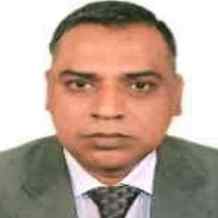
Dr. Devendra Singh is the Professor and Head of the Department of Mechanical Engineering. He completed his B.Tech. in Mechanical Engineering from Motilal Nehru Regional Engineering College, Allahabad (presently MNNIT, Allahabad) in 1992. He served in various industries and then began his teaching career as a faculty member at Ajay Kumar Garg Engineering College in September 2000. He completed his M.Tech. in Automation and Robotics in 2009 and was awarded a Ph.D. in Machine Design in 2017 from the Department of Mechanical Engineering, Faculty of Engineering, Jamia Millia Islamia University, New Delhi.
His areas of expertise include Mechanical Design, Robotics, and Materials Engineering. He was awarded by the Vice-Chancellor of UPTU for excellence in teaching Machine Design and Engineering Mechanics. He also secured third position in India in the NPTEL examination in Engineering Mechanics. His prime focus is on promoting academic research and innovation among the faculty and students of the Department of Mechanical Engineering.
ME Faculty
Faculty at AKGEC fulfill multiple roles as educators, researchers and professionals having a broad range of backgrounds, scholarly interests and
areas of expertise thereby bringing substantial achievement in professional practice and research into the classroom.
Labs
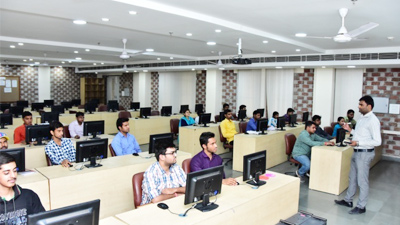
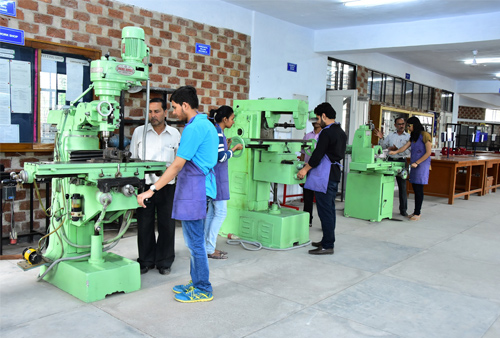
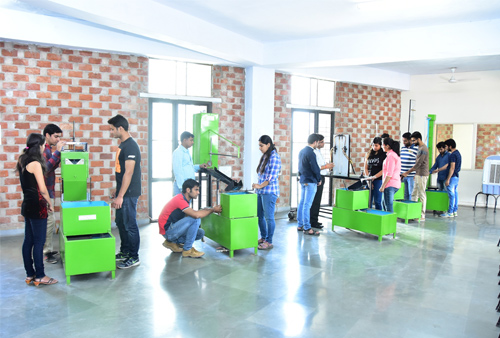
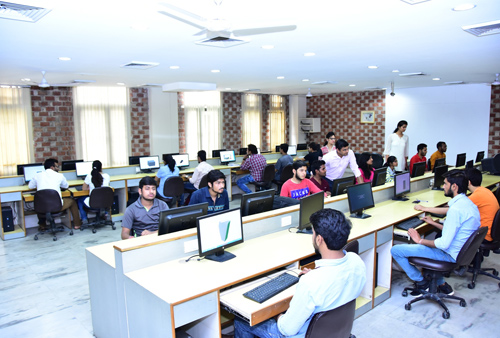
The department is equipped with following lab and workshop facilities.
1. Machine shop
2. Welding shop
3. Smithy & foundry shop
4. Carpentry shop
5. Fitting shop
6. Sheet metal shop
7. Glass Cutting shop
8. Elements of mechanical engineering lab
9. Computer Aided Engg. Graphics Lab.
10. Machine drawing lab
11. Machine design lab
12. Material Science & Testing Lab
13. Fluid Mechanics Lab
14. Heat & Mass Transfer Lab
15. Measurement Metrology Lab
16. Theory of Machines Lab
17. CAD/CAM Lab
18. Automobile & IC Engines Lab
19. Hydraulic Machine Lab
20. RAC Lab
21. Basic Thermodynamics Lab
22. Applied Thermodynamics Lab
Departmental Activities
AKGEC faculties and students were involved in path-breaking research and development activities. AKGEC follows the key ethical principles that should underlie the research endeavor. Researchers here take on real time problems, think innovatively and bring in novel solutions, to advance knowledge and make meaningful contribution to the society.
Gallery